
Hydraulic Cylinders Direct from the Manufacturer: Design, Manufacturing, and Sales in Ukraine
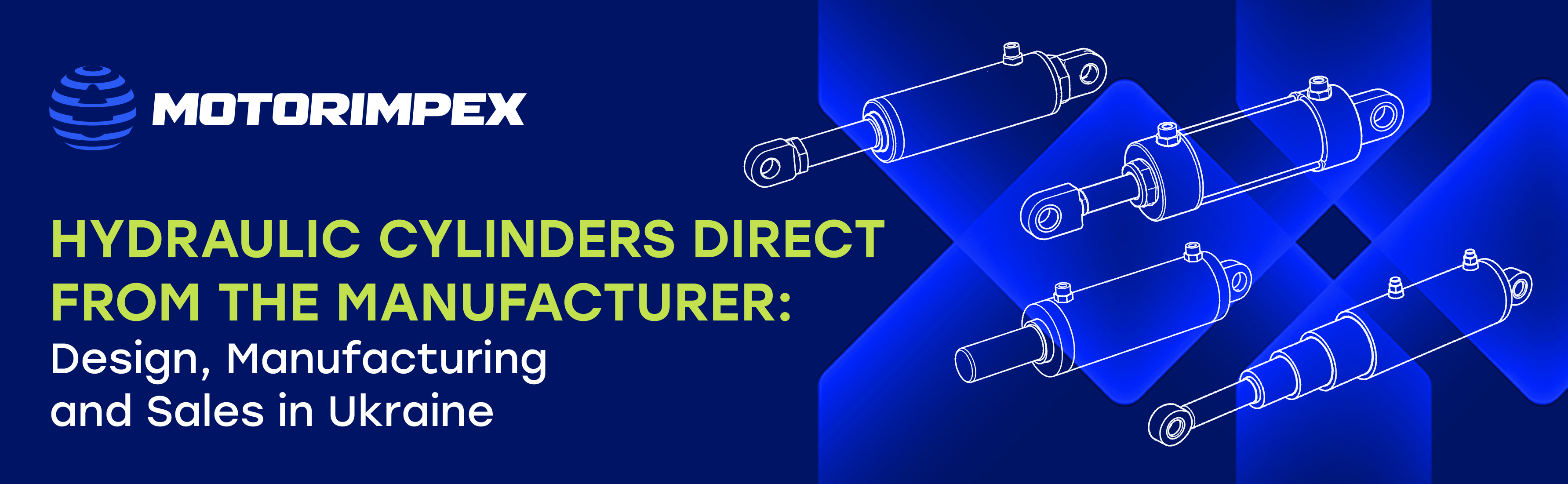
A hydraulic cylinder is the component that drives most of industrial production. A press stamps, a dump truck lifts its body, an excavator digs a trench—and in each of these movements, it is the hydraulic cylinder that does the work, converting oil pressure into actual mechanical force. «Motorex» designs and manufactures hydraulic cylinders in standard configurations, as well as custom-builds them to meet specific technical requirements. We meet the needs of machine-building and agricultural enterprises, as well as the construction and metallurgy industries, by supplying hydraulic components that ensure high levels of equipment performance and durability.
If you need to buy a hydraulic cylinder, our catalog features both our own brand products and official products from our global partners. Here you can order Atos hydraulic cylinders, Ponar hydraulic cylinders, as well as equipment from Duplomatic and Kracht.
Hydraulic Cylinder Catalog: Types and Their Differences
Choosing the right hydraulic cylinder starts not with the price, but with the specifics of the hydraulic system’s operation: how the assembly is mounted, what load it withstands, in how many directions the piston rod moves, the temperature and type of hydraulic oil, and so on. A mistake at this stage can lead to premature wear or a completely inoperable system. The catalog features all popular types:
The piston rod generates force in both directions of movement—extension and retraction. This type of hydraulic cylinder is the most common and versatile solution, which is why it is used in industrial machine tools, presses, and mobile special-purpose equipment.
The rod extends under the pressure of the working fluid and retracts due to a built-in spring or the load’s own weight. Simple design—ideal where the return stroke does not require a power source.
The working element here is a plunger that moves under oil pressure in only one direction. With a minimum of parts and few potential failure points, this mechanism is highly reliable.
Several sections extend one inside the other, so the rod stroke is several times greater than the length of the cylinder body itself when retracted. A classic solution for dump trucks and truck cranes, where the length of the lifting mechanism needs to be «hidden» within a compact footprint.
Mounting and Installation Options
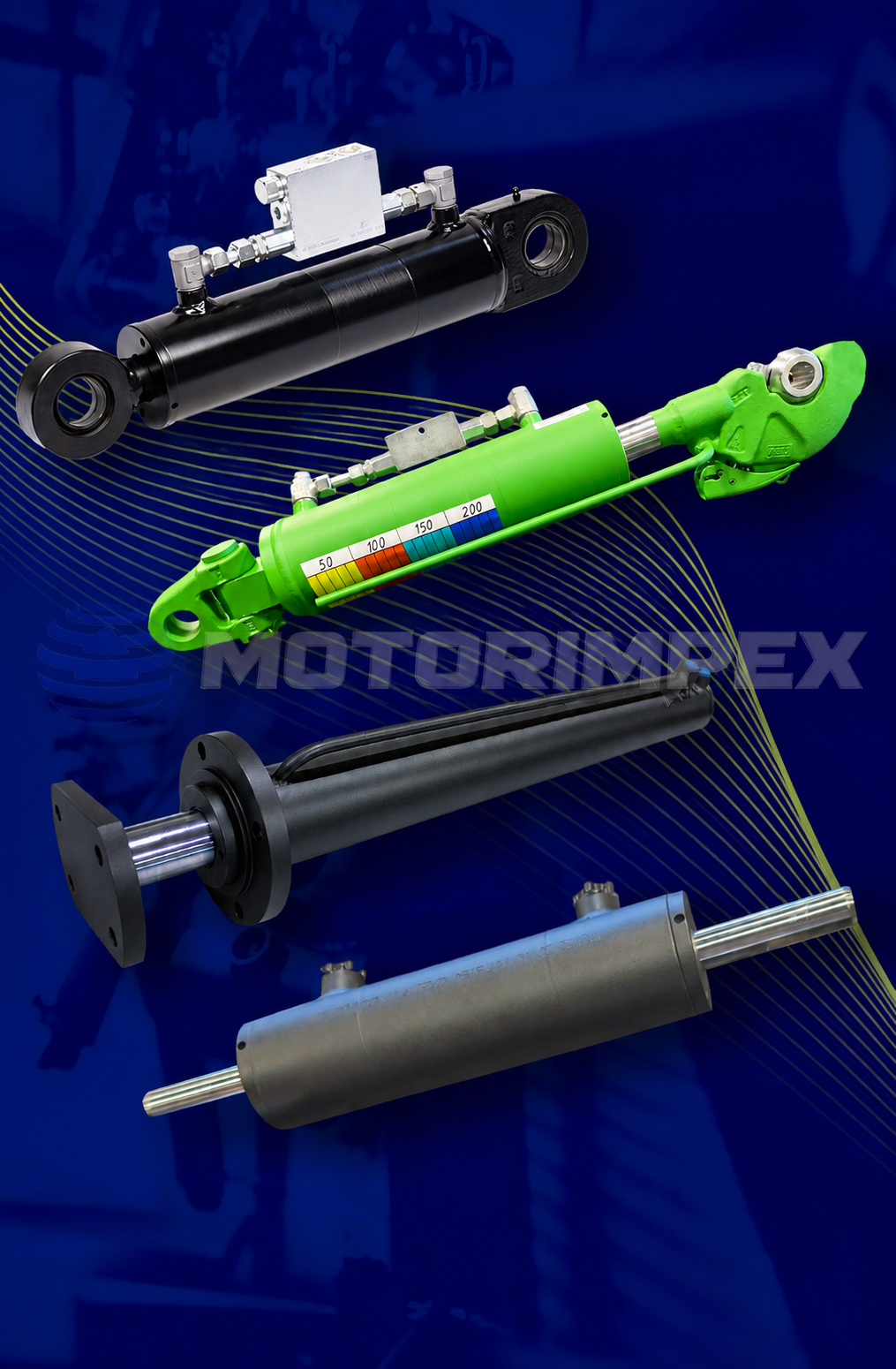
The type of mounting determines how quickly the cylinder can be installed in your system and whether it will withstand operating loads without misalignment. In production, we use several types of mounting configurations, among which the following are the most common:
- Hydraulic cylinder with mounting eyes — eye-to-eye or eye-to-flange, for hinged connections;
- Hydraulic cylinder on mounting feet — rigid mounting on machine beds and frames;
- Hydraulic cylinder with a trunnion — when the cylinder body needs to rotate through a specific angle;
- Hydraulic cylinder with a flange — front or rear flange mounting.
Custom Manufacturing and Design of Hydraulic Cylinders
«Motorex»’s in-house production facilities enable us to fulfill orders of any complexity—from standard cylinders available from stock to unique assemblies based on customer drawings. Turning and milling operations are performed on high-precision Haas (U.S.) machine tools, and every finished product undergoes mandatory hydraulic testing on the company’s own test benches. This is not a mere formality; it is precisely on the test bench that we can determine whether the cylinder body withstands the specified pressure and identify any hidden defects in the welds.
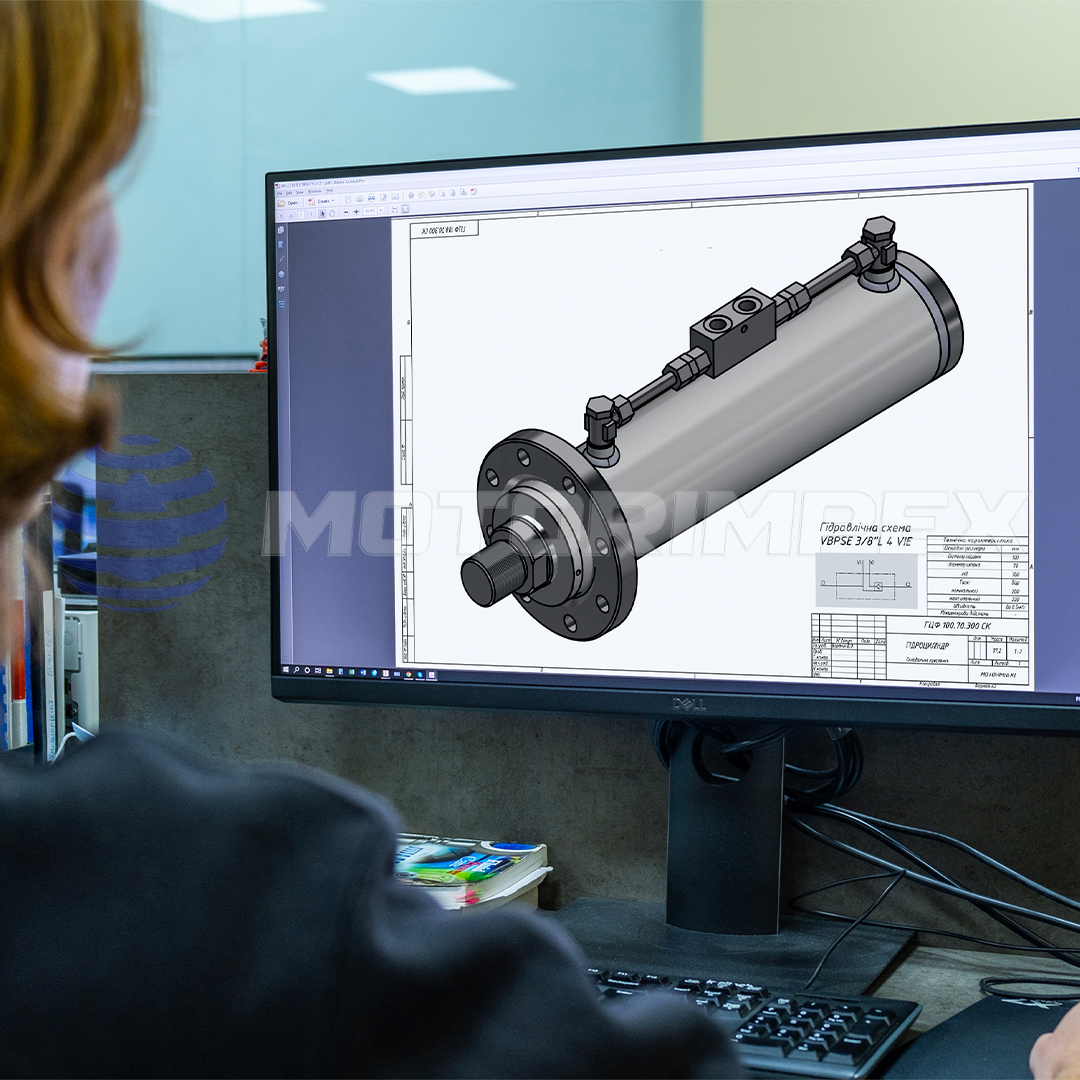
Our engineers perform precise calculations for the hydraulic cylinder based on your specifications:
All connections are sealed with special industrial-grade gaskets—these prevent fluid leaks and pressure drops in the system, even during prolonged operation under load.
Where to Buy Hydraulic Cylinders at a Good Price in Ukraine
«Motorex» since the very beginning of its hydraulic cylinder manufacturing division has maintained the best value for money on the Ukrainian hydraulics market. We are both a manufacturer and a direct importer of European brands, which allows us to keep competitive prices on hydraulic cylinders while avoiding the markups typically added by resellers.
Why customers choose us:
We deliver hydraulic cylinders throughout Ukraine quickly: our logistics are well-established, and popular items are always in stock.
We select equivalent parts, provide complete technical documentation, 3D models, and drawings—we don’t just sell a part; we fully address all technical issues.
Our order form allows us to quickly approve non-standard technical specifications and immediately start production of the part, without months of coordination.
Price of a Hydraulic Cylinder From «Motorex»:
To find out the current price of a hydraulic cylinder or to submit your own drawings for a quote, please fill out the contact form on our website, request a callback, or email us at m-impex@motorimpex.ua. Our specialists will advise you and help you place your order.
How to Choose the Right Hydraulic Cylinder
Even a very good cylinder will fail fast if chosen without regard to real operating circumstances. There are a few things you should check out before ordering.
The rated load is not the force the cylinder has to resist but the peak force – the force that happens after an impact, a rapid jerk, or an abrupt halt of the mechanism. If the safety margin is too small, the initial overloads will start to put a strain on the seals and harm the seating surfaces.
Humidity, dust, temperature variations, corrosive environment… All these variables impact the choice of rod material, seals, and kind of coating. The same cylinder design requires distinct solutions for machine tools in a workshop and construction equipment working outside.
If the rod is extended too fast and no hydraulic damper is available at the conclusion of the stroke, impact stresses will be created on the end cap and seals. A brake circuit should be included in crucial components from the beginning.
The new cylinder must match not only in diameter and stroke but also in fluid type, operating pressure of the pump station, and available connection dimensions—otherwise, installation will require reworking half the assembly.
Maintenance and Extending the Service Life of Hydraulic Cylinders
Hydraulic cylinders seldom fail without warning; wear is usually progressive and may be discovered before a line has to be shut down. Here are some practical guidelines:
- Oil streaks on the rod or near the seals are the beginning of a leak, and the seals should be changed before the system pressure starts to decrease significantly.
- Scuffs and scratches on the surface of the rod quickly «wear down» new seals during replacement, so it’s a good idea to polish or re-chrome the surface rather than just put new seals on damaged metal.
- Play in the eye-type hinge joints is evidence of wear in the bushings—these are affordable parts, but if the issue is neglected, rod misalignment and rapid wear of the cylinder as a whole will take place.
- Timely replacement or filtration of the working fluid to preserve the seals from abrasive particles is more effective than any retroactive repair of components.
Frequently Asked Questions About Hydraulic Cylinders
? How do you calculate the required diameter of a hydraulic cylinder? ›
? How much does it cost to manufacture a hydraulic cylinder based on a custom drawing? ›
? What is the lead time for a custom hydraulic cylinder? ›
Conclusion
Hydraulic cylinders are one of the most important components of industrial and mobile hydraulic systems; the performance and dependability of the equipment depend on them directly. By selecting the suitable kind, mounting arrangement, and technical parameters, premature wear and fluid leakage may be avoided. Motorex produces a broad spectrum of conventional models and bespoke parts based on client designs. High quality is ensured using current Haas equipment and required bench testing. System dependability over the long term is ensured by proper selection, attention to operating conditions, and routine maintenance.


